Brand vs Branding vs Brand Identity vs Brand Strategy: What’s the Difference?
Categories
Ask five people on your team what your brand actually is, and you will likely get five different answers. One says the logo. Another says the reputation. A third points straight at the Instagram feed. Here is the truth most founders learn far too late: brand, branding, brand identity, and brand strategy are four different things, and mixing them up is quietly costing you customers, clarity, and cash right now.
These four words get thrown around in almost every pitch deck and agency call, often used as if they mean the same thing. They do not. Each one plays a distinct role in how a company grows into a business people trust and return to. Separate them clearly, and budgeting, hiring, and briefing your design team all become far easier.
Your brand is what people feel, not what you say
Your brand lives inside someone else’s head. It is the gut feeling a customer gets when your product shows up in their cart, the trust they extend before reading a single review, the story they repeat to a friend over coffee. You cannot fully control your brand, because it forms in the mind of the market, shaped by every experience someone has with you. What you can control is everything that shapes it, and that is where the other three pieces come in.
Brand valuation expert David Haigh sums up why this feeling matters through three simple jobs a brand does for a customer. It helps them navigate an overwhelming set of choices, it reassures them they made the right call, and it gives them something to feel part of. Miss any one of those three, and even a well-funded product struggles to earn repeat trust. Seen this way, a brand can attach itself to almost anything, since it lives in perception rather than in the thing itself. DuPont is a company and a brand. LEGO is a product and a brand. Zelle is a service and a brand. Even Girls Who Code, a nonprofit, runs on the same principle.
Branding is the daily work of shaping that feeling
Branding is the verb. It is every deliberate choice behind the scenes, the tone of your captions, the way your founder speaks on a podcast, the packaging sitting on a shelf next to three competitors fighting for the same eye. Branding never really finishes, because markets shift and a brand that stays frozen in 2022 starts feeling dated by 2026. Strong branding stays consistent enough to be recognised and flexible enough to stay relevant year after year.
In their book Designing Brand Identity, Alina Wheeler and Rob Meyerson map branding as five connected stages: conducting research, clarifying strategy, designing identity, creating touchpoints, and managing assets over time. Every logo, caption, and packaging decision your team makes sits inside one of these five stages. Skip a stage, or tackle them out of order, and the brand that emerges tends to wobble the moment it meets a real market.
identity is the visual language people recognise
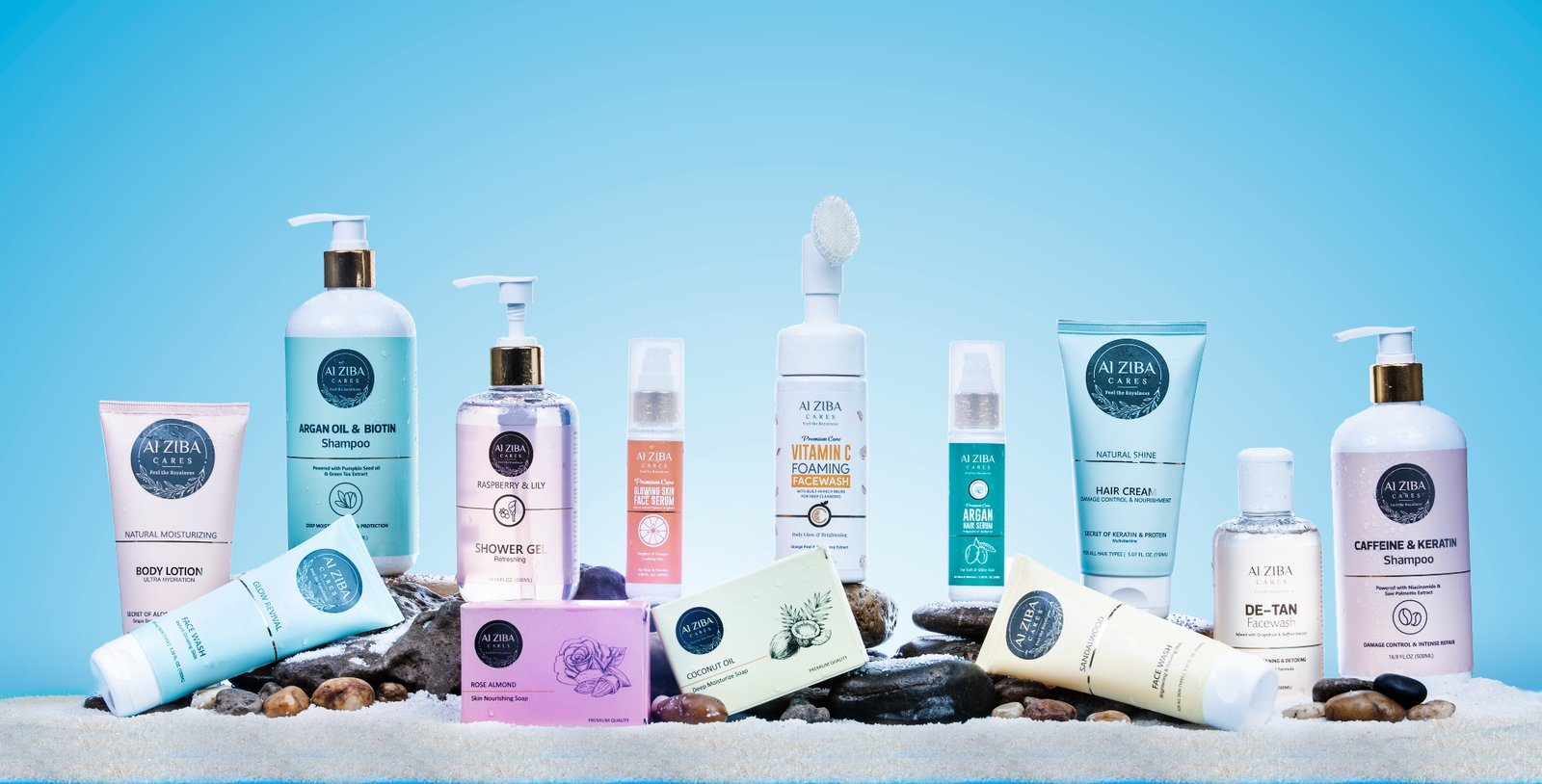
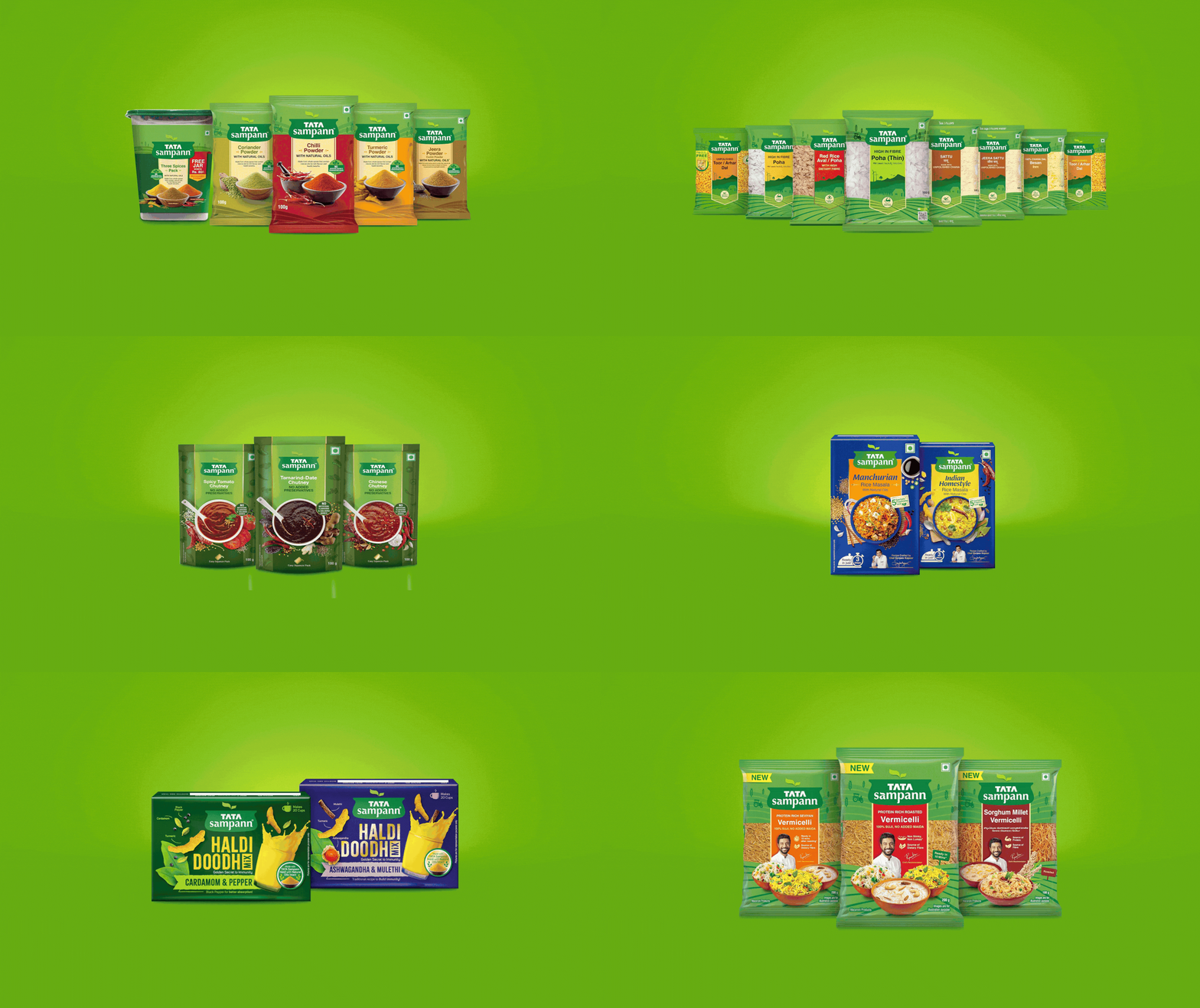
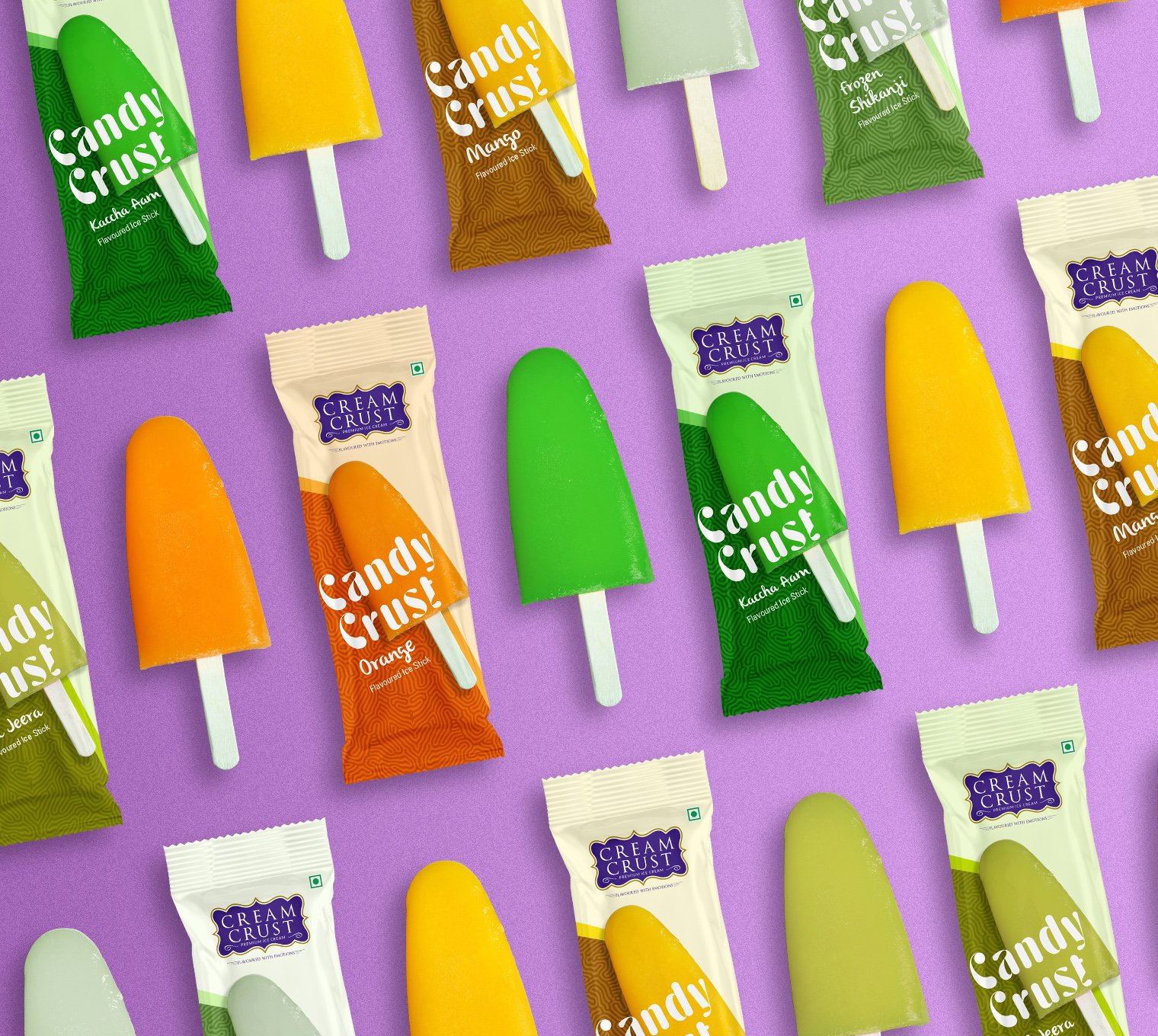
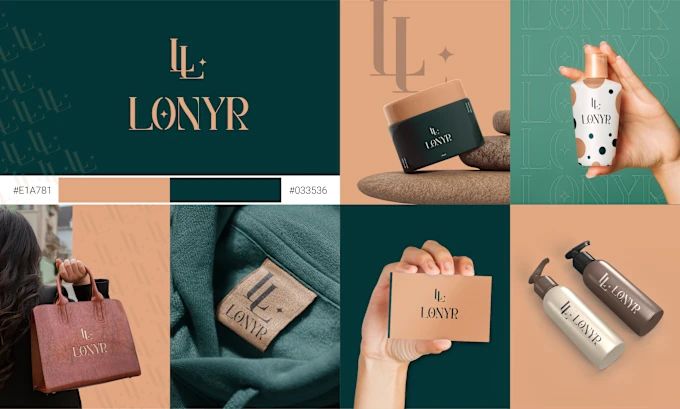
Brand identity is the tangible layer, your logo, colour palette, typography, and the packaging structure that ties a product on a shelf to a post on social media to a billboard on the highway. You can see how this comes alive across categories on our Portfolio page, where strategy turns into shelf-ready design. Identity is meant to be experienced through the senses, seen on a shelf, held in the hand, heard in a jingle, felt in the weight of a packaging box. That sensory layer is exactly what fuels recognition and makes a big idea feel accessible within seconds, long before a customer reads a single word. Identity is what a designer eventually hands you as final files. On its own, though, a beautiful identity without strategy behind it is decoration rather than direction.
Brand strategy is the plan that makes everything else work
Brand strategy is the thinking that happens before a single pixel gets designed. It defines who you are building for, where you sit compared to competitors, and why a customer should pick you over the ten other options sitting beside you on Amazon or Blinkit. Strategy answers the questions that branding and identity later express visually and verbally. Our Brand Strategy service walks through exactly how we build this foundation for FMCG, beauty, and D2C brands before we touch a single design element. Skip this step, and even the most talented designer is left guessing, filling gaps with assumptions instead of insight, which is exactly how brands end up looking polished yet saying nothing memorable at all.
Take NEXT Insurance, a small business insurance brand built with the agency COLLINS. Most insurers lean on fear and mascots to sell policies. NEXT’s strategists chose the opposite path, positioning the brand around opportunity and encouraging small business owners to take smart, confident leaps rather than play it safe. That single strategic decision, made before a single visual was designed, shaped everything the brand later looked, sounded, and felt like. It is proof that strong strategy does not need a Disney-sized budget. It needs a clear, well-researched point of view.
Here’s the Whole Thing in One Glance
| Term | What it really is | The question it answers |
| Brand | The perception living in a customer’s mind | What do people already believe about us? |
| Branding | The ongoing actions that shape that perception | What are we doing today to earn that belief? |
| Brand Identity | The visual and verbal system customers recognise | How do we look, sound, and feel? |
| Brand Strategy | The plan sitting behind every decision | Why should anyone choose us? |
Why this confusion quietly drains your marketing budget
Most founders hire a designer when they actually need a strategist first. They spend lakhs on a fresh logo hoping it fixes a positioning problem, then wonder why sales barely move. Jumping straight to identity without strategy is a little like decorating a house before checking the foundation. It looks fine for a while, then the cracks appear right when you are scaling, entering a new market, or facing a sharper competitor.
How we bring brand, branding, identity, and strategy together
At Richest Branding, we treat these four pieces as one connected system rather than four separate projects. We have spent years doing exactly this for FMCG, beauty, wellness, and D2C brands across 24 countries, building strategy first and translating it into identity, packaging, and campaigns that genuinely move people. Curious about how we work and who is behind the thinking? Take a look at our About page. If you are standing at the start of this journey and want a second pair of expert eyes on where your brand currently stands, get in touch with us, we have your back.
Frequently Asked Questions
-
What is the difference between brand and branding?
A brand is the perception people carry in their mind about a company. Branding is the ongoing set of actions, design, messaging, and experience, used to shape that perception over time.
-
Is brand identity the same as branding?
Brand identity is one part of branding. It covers the visual system, logo, colours, and typography, while branding also includes tone of voice, customer experience, and consistency across every touchpoint.
-
Why does brand strategy come before brand identity?
Brand strategy defines positioning, audience, and differentiation first. Without this groundwork, identity design turns into guesswork, since there is no clear direction for the colours, tone, or packaging to follow.
-
Can a small business build a brand strategy on a limited budget?
Yes, brand strategy is about clarity of decisions rather than the size of the budget. Even early-stage FMCG and D2C brands benefit from defining positioning and audience before investing in design.
-
How long does it take to build a complete brand identity?
Timelines vary by scope, but a thoughtful brand identity project, from strategy through to final design, typically takes several weeks to a few months depending on complexity.